

Background
Uganda is currently experiencing rapid depletion of its natural resources for example, water catchment areas, wetlands, forests, which, in addition to ecological challenges, is leading to conflicts in most parts of the country. The Ugandan government has taken action and formulated policies and policy regimes to regulate land use and impacts on the environment. Despite the existence of laws and regulations, there is a discrepancy between policy formulation and the reality of implementation on the ground.
Compared to other countries, Uganda ranks high in its number of commitments regarding climate change mitigation and environmental protection. The country has launched its National Climate Change Policy 2015, submitted Nationally-determined Contributions to the United Nations Framework Convention on Climate Change in 2018, and has a Green Growth Strategy in place and signed up. This strategy was developed by the National Planning Authority in partnership with the Climate Change Department of the Ministry of Water and Environment with financial support from the United Nations Development Programme (UNDP) which was developed by a multi-sectoral committee comprised of state and non-state actors chaired by the National Planning Authority. The strategy seeks to operationalize the tenets of a green economy as espoused in the Uganda Vision 2040 and the National Development Plan III, and covers a timeframe of fifteen years.
A Policy Brief number 3, March 2002 titled “The Costs of Environmental Degradation and Loss To Uganda’s Economy With particular Reference To Poverty Eradication” by Yakobo Moyini1, and others indicates that the cost of health care and loss in labour productivity from mortality and morbidity due to contaminated water has been estimated at a further cost to the Ugandan economy of between US$ 22 – 35 million per year. On the other hand, the same report indicates that improper handling of solid waste by the community for example costs the City Council of Kampala up to UGX 1.5 billion per month in garbage collection and disposal. The brief notes that the severity of this environmental problem is compounded by the fact that the livelihoods of many Ugandans intimately depend on the environment, both as a source of subsistence and as a basis for production.
According to the Republic of Uganda State of the Environment report, 2001;, the costs of environmental degradation in Uganda have been conservatively estimated to be between 4-12 percent of the gross national income (GNP)
Environmental degradation in the country—which includes aspects like wetland encroachment, contamination of water resources, poor garbage disposal, among others is critical: A case Study of Water Resources in 4 Districts of Mbarara, Ntungamo, Katakwi, and Kasese, titled, ”How Effective are Uganda’s Environmental Policies?” by Twesigye Morrison Rwakakamba and others, indicates that egradation costs represent an environmental debt of about US$ 1–4 billion today. In the same report it is noted that although Uganda is endowed with sufficient natural resources most of these are being depleted at an alarming rate; and that there is severe water scarcity predicted for the near future, particularly in more populated areas and in the more fragile arid and semiarid pastoral areas.
The same report further shows that although the Ugandan government has formulated a number of policies to regulate land use and impacts on the environment, at the extent to which natural resources are being depleted shows that these laws and policies are not enforced effectively. Available data shows that there are glaring gaps between the existence of laws and policies, and the reality of implementation on the ground; for example there is rapid depletion of water and forest resources, and this has already led to conflicts in many areas among the Ugandan communities. There is need for effective implementation of existing policies and laws and for increased budgetary allocations from the current 25.6 billion shillings to 34.45 billion or more, to accommodate funding for the execution of policies and laws as well as thorough review of the existing environmental policy regime with a view to tailoring, customizing, and localizing these policy regimes for practical purposes.
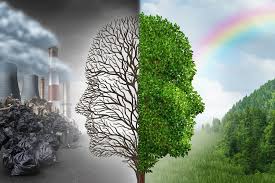
This strategic plan has been developed out of the need to address the many challenges aforementioned. It should be noted that Expenditure in the health system each year on treatment of sanitation related diseases including malaria amounts to some 26,999.6 million Uganda shillings (UGX) and diarrhea diseases alone consume 4,022.4 million UGX).
The key behaviors affecting sanitation related diseases are handwashing, excreta disposal and water collection, handling and storage practices. Surveys have suggested that many Ugandans:
- do not have access to handwashing facilities and materials at key times (after defecation (88%) and after handling infant’s excreta (97%),
- do not consider children’s stools dangerous and therefore do not dispose of them safely,
- do not teach children to use latrines until after the age of 3 years (average 51%),
- do not have access to safe and hygienic excreta disposal systems (average 52.2% households without access but worst in Kalangala where 98% are without access),
- do not have access to safe and adequate drinking water supplies (average of 60% households without access within 1.5km from homes
- contaminate drinking water before consumption (81%).
- understand the link between poor sanitation and sanitation related diseases (96.6%)
- consider that poor sanitation is the responsibility of someone else.
- Solid Waste Disposal: Solid waste disposal becomes an increasing problem with increased population densities. In rural areas, fewer commodities are purchased with inorganic packaging. Organic material is usually composted and used as a soil conditioner. In urban areas there is still a high organic content to the waste, however the areas for disposal are more limited. Piles of refuse build up on streets and waste ground in most urban areas in Uganda.
- Drainage: Drainage is an important issue in Uganda. Many settlements and towns are built in low lying swampy areas, and some of these settlements which were established on higher ground have now spread to lower lying areas, particularly the low-income residents. Residents of swampy areas suffer more malaria than those who live on higher ground, their houses are prone to flooding and they have problems in latrine construction.
- Climate change is one of the major threats to Uganda’s sustainable development and efforts to end poverty. The country has experienced increased adverse weather patterns such as prolonged drought in the north, landslides in the east, and devasting floods.
The 2014 State of the Environmental Report highlights that that the major environmental problems in Uganda include overgrazing, deforestation, and use of outdated agricultural methods, all of which lead to soil erosion. Attempts at controlling the propagation of tsetse flies have involved the use of hazardous chemicals. The nation’s water supply is threatened by toxic industrial pollutants; mercury from mining activity is also found in the water supply. Uganda has 39 cu km of renewable water resources with 60% used for farming and 8% used for industrial activity. Roughly 80% of the nation’s city dwellers and 47% of the people living in rural areas have access to potable water respectively. Forests and woodlands were reduced by two-thirds between 1962 and 1977. By 1985, 193 square miles of forests were eliminated. Between 1983 and 1993, an additional 7.7% of forest and woodland were lost. Wetlands have been drained for agricultural use. Poaching of protected animals is widespread. Uganda’s three national parks total over 6,300 sq km (2,400 sq mi). As of 2001, 7.9% of Uganda’s total land area was protected. The same year, 18 of the nation’s mammal species and 10 of the nation’s bird species were endangered, as well as 8 species of plants.
The Ugandan government has formulated a number of policies to regulate land use and impacts on the environment. These policy frameworks seek to integrate ‘‘environmental concerns in the socio-economic development planning of the country”.
With the support of the World Bank, Uganda is adopting progressive environmental-friendly policies, and innovations including climate risk screening and budget tagging.
To date, the Ugandan government has developed a number of policy regimes to regulate and influence land use and environmental impacts. For example, the Poverty Eradication Action Plan (PEAP, 2000), the Sector Wide Approach to Planning for Water and Sanitation Sector (2002), the National Wetlands Policies (1995), the Environmental Impact Assessment Resolutions (1998), the National Environment Management Policy (MLWE 1994), the National Environment Statute (MLWE 1995), the Constitution of the Republic of Uganda (GoU 1995), and the current draft of the National Land and Land Use Policy, among others.
The National Environmental Management Statute was also enacted, establishing the National Environmental Management Authority (NEMA) as well as providing for a broad range of issues pertaining to the functions of NEMA and measures for environmental protection including water resource management.
The national climate change policy: Several local and global studies on climate change confirm that it affects and will continue to affect Ugandans’ lives and the country’s economy with adverse consequences over time on different sectors such as agriculture, health, and infrastructure among others
A Case Study of Water Resources in 4 Districts of Mbarara, Ntungamo, Katakwi, and Kasese, titled, “How Effective are Uganda’s Environmental Policies?, by Twesigye Morrison Rwakakamba and other reports that, in spite of these policy provisions, government commitment to environmental conservation is still questionable given the meager budget allocation to the environment sector in the Medium Term Expenditure Framework (MTEF) and corresponding annual budget allocations. MTEF ceilings for the 2006–2007 and 2007–2008 financial years, which originally stood at 34.45 billion and 32.38 billion shillings, were slashed to 25.6 billion shillings (2006–2007) and24.47 billion shillings (2007–2008). Justification for the Strategic Plan
This Strategic Plan has been developed to contribute to the achievement of the core objectives of the National strategic plan on natural resource conservation.
The development process in Uganda is guided by Vision 2025, the Poverty Eradication Action Plan (PEAP) which is Uganda’s Poverty Reduction Strategy Paper (PRSP), various Ministerial Policy Statements and donor -led co-operation framework papers. Sectoral development plans are now consolidated into sector wide development plans (SWAP) to enhance as much as possible, synergies across sectors and to minimize conflicts and duplication of effort. Overall coordination and implementation oversight for the PEAP and SWAPs is however, provided by the Policy Monitoring and Analysis Unit (PMAU) in the Ministry of Finance, Planning and Economic Development. To be able to fully reflect the contribution of the environment to economic development; therefore the planning frameworks in Uganda need to recognize and fully take into account environmental values. Yet, although Ugandans greatly depend on environmental resources, the PEAP makes limited reference to the environment as an important input to fighting poverty. This needs to be fundamentally changed in subsequent revisions of the PEAP.